









![MORE THAN A GAME. With two diving catches in the outfield, the Lions showed up defensively, aiding in their victory over the Pacers. One catch was made by Atwood, and the other by McGraw. Throughout the game, the Lions knew that it wasn’t just about their victory today. “I think [playing for cancer] makes it bigger than just a game,” McGraw said. “Knowing that you have a bigger impact in this world than just who you are as one person.”](https://wlhsnow.com/wp-content/uploads/2026/05/I70A1454-1-1200x800.jpg)











![Students in the National Art Honor Society work on the Mount Hood mural on the window of SouthLake Church. The students brought a variety of paints and mixed their own custom colors. “Instead of brushstrokes, we’re doing more dabbing, because it gives [a] better impression of tree foliage, rather than looking like actual brush strokes, because if we’re painting trees, we need it to look like trees,” Crawford said.](https://wlhsnow.com/wp-content/uploads/2025/10/IMG_2397-1200x900.jpg)



The First Amendment of the United States Constitution allows all individuals the right to free speech, assembly, religion, to petition the government, and the press. Despite this, cases of censorship are prevalent across the country, a trend occurring around the world.
The Indiana University situation
The freedom of the press has been challenged since before the Constitution was established, the first major case being Crown V. Zenger, which reached its verdict on Aug. 4, 1735. Most recently and notably, on Oct. 14, 2025, Indiana University’s (IU) journalism website, the Indiana Daily Student (IDS), published a letter from the editors, stating that the IU Media School administrators only wanted homecoming coverage and “no other news” featured in their next newspaper, which was set to release on Oct. 16.
Jim Rodenbush, former IU Student Media adviser, declined the university’s demands, citing the 1969 IDS charter that guarantees full student editor control without prior review. In retaliation, the university fired him for “lack of leadership and ability to work in alignment,” and hours later, completely cut off the newspaper. Two weeks later, Rodenbush decided to push a lawsuit against the university for wrongful termination and a violation of First Amendment rights.
Following the initial statement, the IDS published eight more letters to and from the editors, each one going through a certain event, update, or response uncovered at that time. One of those letters, on Oct. 30, discussed the university reinstating the newspaper for the rest of the year.
Soon after the firing of Rodenbush and the initial cutting of the newspaper, on Oct. 21, the Student Press Law Center (SPLC), an organization that specializes in helping student journalists, released a statement regarding their legal take on the situation. Alongside the statement, they also released a censorship tracker dedicated to the situation. Mike Hiestand, senior legal counsel for the SPLC, has been involved with the SPLC since 1989 and has helped numerous students during his time there.
“It seems like such a clear First Amendment violation that’s taken place there,” Hiestand said. “It’s getting a lot of attention. I know that the university itself has lost a lot of money. Donors are pulling back and have let them know they’re not happy with what the university has done there. The IDS is one of the more storied student publications in the country; it regularly goes to the big national conventions and cleans up on lots of the awards. They’re known as a very credible program, doing good journalism. They have a very active alumni network, [a lot of] former IDSers there. So they have not taken kindly to this. I’ve talked to a couple of advisors who have said that their administrators have let them know they are watching what’s going on at [IU], and don’t want anything like that happening at their school. It’s just a reminder to school officials across the country that the laws at public colleges are very clear, and that school officials have to keep their hands off, and if they don’t, there’s going to be consequences.”
A few years prior, the IDS was in financial trouble, totalling roughly a million dollars of debt due to a lack of advertising, without a clear direction to make it up. Teresa White, senior lecturer for the IU Media School and director of the High School Journalism Institute, was a representative of IU at the Journalism Education Association/National Scholastic Press Association National High School Journalism Convention in Nashville, Tennessee.
“The media school got the university to forgive that million dollars of debt. But the idea would never have been able to dig [them] out of that hole; they had to come up with some kind of plan,” White said. “They had this committee that had alumni, student editors at that time, and faculty members on it, [which wondered] ‘what are we going to do over the next three years that will keep the ideas running and allow them to turn the tide and start making a little money?’ They came up with a plan, [which] was to print a limited number of print editions and continue doing all the digital. They were supposed to make special editions, because that would be the ones that they printed periodically.”
The original plan to solve the debt was made in October 2024, where most of the money earned would be through advertising. In that plan, it stated the number of issues the IDS was able to publish, including its special editions.
“The idea [was] that they would collect the most advertising from those different strategies they would use to try to make more money so they could support themselves,” White said. “As far as we know, [the plan is] only good for the end of the year. Now there’s a new committee that has more alumni and more current students and current faculty only, who are trying to come up with plans for how we can make this work after this year.”
Kelton O’Connell, senior at Bloomington High School North in Bloomington, Indiana, is the current Editor-in-Chief of the yearbook and is also an intern and freelance reporter for the B Square Bulletin, where he originally wrote his article about the situation.
“My editor wasn’t planning to cover that at all,” O’Connell said. “The IDS situation is one of those stories that’s easy to cover, at least on a surface level. There’s a very clear story. It’s something that people talk about because it’s naturally sensational. I don’t think it was on his list of priorities, but I asked him if I could cover it, because it felt extremely relevant to me, as a young [journalist]. Having the opportunity to speak to Andrew [Miller], one of the Co-Editors-in-Chief of the IDS, [and] getting to talk to some of those people who are relevant within that situation is always good. People talk about networking, but I think it was interesting approaching that from the perspective of a student journalist myself, and also as someone who’s looking at college options and where IU is one of those options.”
As Bloomington High School North is around 15 minutes away from IU, O’Connell feels more impacted by the situation as a whole.
“Bloomington’s identity, a lot of it has to do with IU. Almost everyone who lives here, at least the people I interact with, is connected to IU in some way or another. So having that proximity, and IU being such a strong part of the Bloomington community, makes it feel much more real and much more impactful and much more relevant,” O’Connell said. “It’s easy, especially for high school students, to dismiss the things that are happening around the world and around the country. We hear about the stuff that the federal administration is doing, [and] even budget levels are hard to put in perspective. But something this simple and big on such a local level makes it much more [ignorable]. I think that that’s made a lot of us students think about the parallels that are occurring at the state, federal, and national [level], what the shift is looking like, and IU’s attack on the IDS, as a model of what’s going on everywhere.”
Before the start of the academic school year for IU, Mark Cuban, businessman, former Shark Tank investor, and minority owner of the Dallas Mavericks basketball team, donated $250,000 to the IDS as a way to help ease the debt.
“It’s raised a lot of questions, and although things have settled down and we’re going forward right now, there are still a lot of unanswered questions,” White said. “We’re still seeking answers, [such as] Mark Cuban [giving] a quarter million dollars [to the IDS]. Where did that go? Why wasn’t the IDS able to use that money? Because the student media director was fired and said that he didn’t have access to that money. So where is that? We have a lot of lingering questions, and we’re going to keep asking them, because journalism faculty are the ones who are never satisfied till they have answers.”
IU isn’t the only college to have cut off its newspaper. On Dec. 1, 2025, the University of Alabama suspended two of its newspapers indefinitely, including Alice, a fashion and wellness magazine that covers primarily women, and Nineteen Fifty-six, which covered black student life and culture.
Other colleges in lawsuits
Beyond newspaper censorship, other colleges across the nation have seen other First Amendment situations, most of which involve lawsuits with the Trump Administration. This year alone, there have been several colleges fighting for either their First Amendment rights or to keep their funding.
The most recent lawsuit came from the University of California (UC) system, with the dispute starting in early August. The lawsuit itself sought defense of the system’s First Amendment rights as well as a way to restore critical research funding.
Another lawsuit saw Harvard University, as well as the American Association of University Professors (AAUP), attempting to challenge the Trump Administration after it froze over $2 billion worth of funding and research, as well as violations of First Amendment rights. On Sept. 3, both cases were settled in favor of Harvard and the AAUP.
“While the court ruled unequivocally in the AAUP’s favor and crafted a remedy that should undo much of the harm caused by the Trump administration, the fight is far from over,” the AAUP said in a statement. “The Trump administration will certainly appeal. Furthermore, the Harvard administration could settle with the Trump administration, and if the terms are anything like those at Columbia, Brown, or the University of Pennsylvania, that would threaten academic freedom and the rights of faculty and students.”
Among the aforementioned colleges and universities, others, such as Cornell University and the University of Virginia, have also made deals with the Trump Administration, but some were faced with criticism.
In August, the Stanford Daily, Stanford University’s student media publication, as well as the Foundation for Individual Rights and Expression (FIRE), announced that they were suing the Secretary of State Marco Rubio for revoking the visas of immigrants and international students, as well as deporting them for protected speech.
“Stanford’s a private school, not a public school. Some of the legal issues are going to be different,” Hiestand said. “The Stanford case is more about ‘do we want to give the administration this sort of unfettered power over immigration?’ We could say that international students are protected by the First Amendment. The First Amendment in our country protects people; it doesn’t protect just citizens. Traditionally, international student journalists were protected in the same way that their domestic colleagues were, but right now, the administration has taken upon themselves to just say ‘yes, you’re covered by the First Amendment, but only until you actually engage in speech we don’t like, and then we’re going to cut your visa status.’ To say that they have any sort of First Amendment protection is made up. It’s theoretical if you have First Amendment protection, but the government can take it away if they don’t like what you’re reporting. There is no First Amendment protection.”
On Oct. 15, the SPLC published an article talking about an amicus brief, where the SPLC and 55 student-run publications and newsroom leaders across colleges, argued in defense of international student journalists’ First Amendment rights and student journalism as a whole. The brief was filed as a showcase of other publications and how these policies leave lasting effects beyond a campus, as well as to highlight the emotion the Stanford Daily was experiencing.
“Our purpose as a friend of the court brief is supposed to be providing advice to help the court make its decision, not necessarily taking a particular side or not, although certainly, we definitely have a particular side in this case, but our goal in that case was simply to provide the judges with some information about what happens in student newsrooms, and the true impact that this is having,” Hiestand said. “It’s unlikely that most of these judges have any real sort of understanding of our experience about what happens in college student newsrooms and what even student journalism does. Our brief was just an attempt to say, ‘these students at Stanford are saying it’s had a chilling effect on their ability to do their work. And here are 50 others that are saying exactly the same thing.’ This is not just limited to Stanford. This is a real thing that we at the [SPLC] are hearing, some of these other journalism groups are hearing, and that’s happening within newsrooms. It was an ability for student journalists to stand up and say, ‘This is wrong, what’s taking place is wrong.’ There’s so much under attack right now, there’s so much stuff that’s coming up, you just don’t even know where to start. So this was at least one small thing that student editors across the country could do to stand up and say, ‘what’s going on right now needs to stop.’”
According to SPLC, over the last four decades, state and federal courts have pointed out over 60 cases of censorship involving the student press in public colleges and universities. But censorship doesn’t just affect college students.
High school censorship
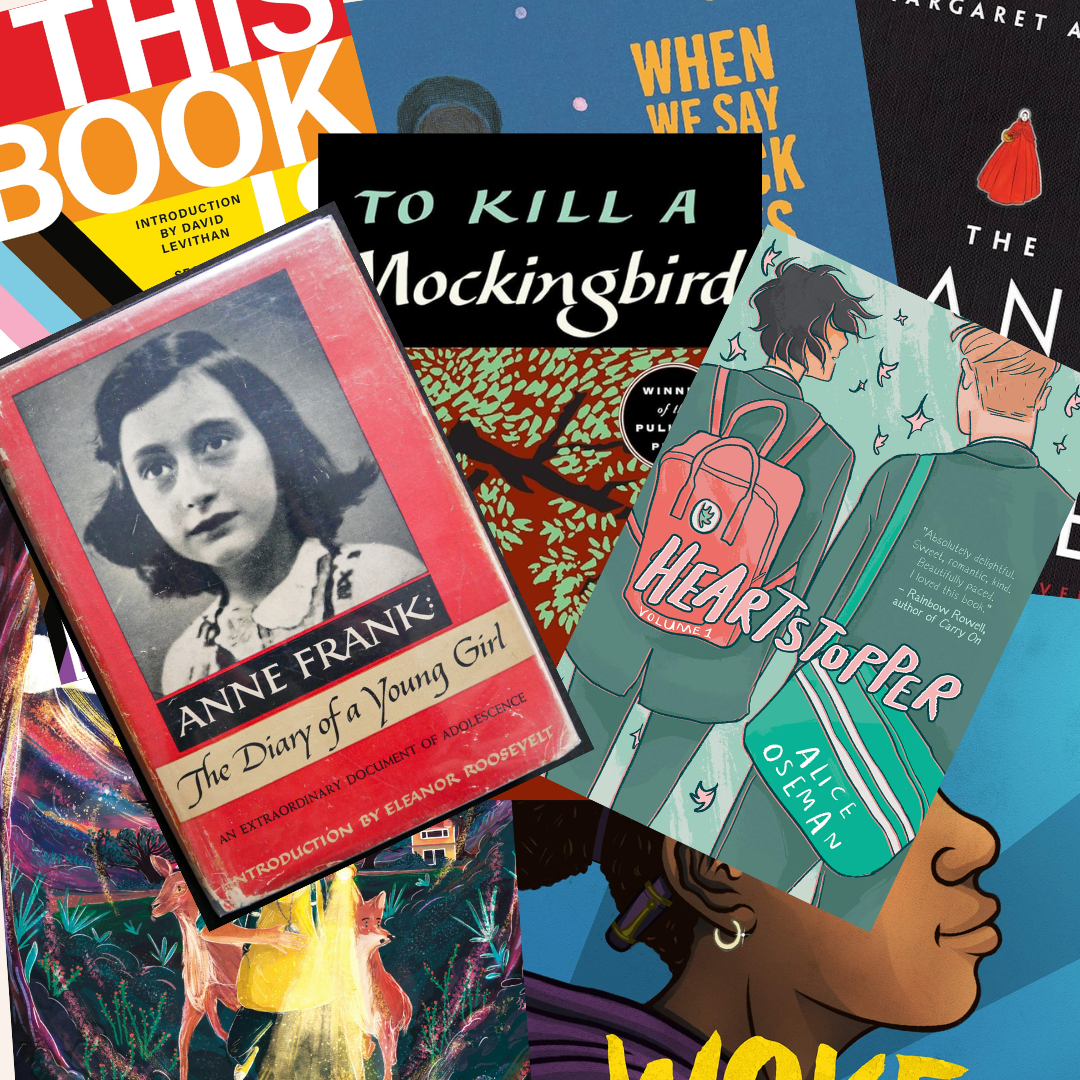
There have also been cases of censorship throughout K-12 programs across the United States. Part of this comes through banning books that some districts would find unsuitable for certain students.
According to PEN America, during the 2024-25 school year, there were a recorded 6,870 cases of book banning, with over 4,000 unique titles in the United States. This is around 4,000 fewer than the 2023-24 school year, which had over 10,000 cases.
Patrick McDonald, English teacher and journalism adviser at Oregon City High School, is an alumnus of IU. McDonald started his teaching career in Illinois before moving to Oregon, where he has been teaching journalism on and off for 25 years and has been teaching English at Oregon City for 28 years.
“I think book banning and book censorship are just inherently wrong,” McDonald said. “When you begin telling people what they can and can’t have access to as far as thoughts and ideas, it restricts the free flow of discussion in a society, and it brings up really serious questions about who’s making those decisions and why, and usually, when you start answering those questions, it creates a whole other set of problems. [Censorship] is a slippery slope, and it’s a dangerous thing. It’s just indefensible.”
There has also been a fair share of journalism censorship cases throughout different high schools in the country.
In California, Mountain View High School’s student newspaper, The Oracle, was involved in a lawsuit against the principal, as well as the district, in February 2024 for attempting to alter the content of an article about sexual harassment. After its publication, the district let go of the Oracle’s advisor, as well as the introductory course to their journalism program.
More recently, on April 29, 2025 in Chicago, Illinois, Alexandria City High School’s publication, Theogony, published a call-to-action article written by the staff and editorial board, stating that the school board was going to vote on policy revisions and a new regulation in the following days that could hurt the publication and invoke censorship of what the publication produces.
Both policy changes and direct interference by administration are common censorship challenges that student publications face.
“It is clear to me that students’ speech on campus is being restricted by the university,” McDonald said. “[With] editorial control for student publications, there’s a long-standing tradition that [the] students make decisions about the functioning of the paper.”
Almost every publication has its own form of an editorial policy or guidelines to ensure the quality of articles, as well as the integrity of the publication. McDonald has raised concerns about student press freedoms.
“Once [student editorial control] begins eroding, you lose the institutional memory that’s built up over time that allows students to teach that to other students, because much of what happens in a thriving journalism program is students come in with little to no knowledge of it and begin understanding the process, the ethics, the professionalism, the traditions, the civic responsibilities, the role of responsible journalism in a democratic society,” McDonald said. “They begin to embody those things, embrace those things, and then practice those things. And those people who come in behind them look to those ahead, [to] students at the top or looking to professional journalists. That’s what the role of a journalist is in a democratic society. For that to function properly, you need to be able to have the young ones be able to see it in its best possible form. When you begin restricting that stuff, then it has a downstream effect, not just an immediate effect on what’s going to be produced afterwards, but it has a downstream effect for the upcoming generations.”
As a student journalist, O’Connell believes that being aware of the censorship that is happening in student newsrooms is important.
“We haven’t lived very long, we don’t know what things are supposed to look like, and it can be easy to get discouraged when stuff is happening, especially when I think that could happen to me,” O’Connell said. “It doesn’t matter who you are; this stuff is happening, and so it’s easy to lose hope, but I think the work that we do is important. The work of journalism is so important, and I think it’s imperative that young people, high school students, and college students are fighting to make sure that these things that are crucial to this democratic experiment stay intact. Otherwise, we’re screwed.”
According to SPLC, as of 2025, 18 states around the country currently have legislation to protect student press freedom rights, including Oregon.
“Student press has significant First Amendment protections under the law,” Hiestand said. “They’re doing actual journalism, and sometimes it’s journalism that might not make the school look good, or they think doesn’t make the school or school officials look good. But that’s tough nuggets. It’s just a reminder that the law is in place, and it’s not optional.”
Some high schools practice prior review, which is defined by the SPLC as “when your principal or another school official reads the content of your student publication before it is published and distributed.”
However, in some cases, publications have prior restraint, which is defined by SPLC as “when a school official tells you that you can’t publish a story or takes any action to prevent you from doing so.” This particular practice is a form of censorship and isn’t allowed under the First Amendment.
My opinion
Censorship affects everyone. As a student journalist, it is detrimental, not only to me, but my future career and publication, that First Amendment rights are protected.
Each amendment of the United States Constitution was crafted as a way to appeal to everyone, while making sure that no one takes over complete power. When these rights are taken away, it impedes student journalists’ ability to provide critical information and participate in our democratic society.
Countless times have there been violations of these rights, and as time goes on, this is more than likely to continue, if not accelerate. The more censorship happens, the further all people stray away from being able to speak on what they want.
As journalists in particular, our job is to be a credible source that people are able to look at and rely on to keep them up to date on any issue there might be. As a recurring trend, censorship is nothing but complete damage to the integrity of journalism, as well as freedom of speech as a whole.
The most important thing to keep in mind when facing censorship is that you aren’t alone. Countless other publications across the nation are under threat of their First Amendment rights being taken away. But that also means there are resources to help you, including the SPLC.
I strongly disagree with the use or practice of censorship, and I believe that if this trend continues, it can cause irreparable damage to all who are protected under this amendment.
