











![MORE THAN A GAME. With two diving catches in the outfield, the Lions showed up defensively, aiding in their victory over the Pacers. One catch was made by Atwood, and the other by McGraw. Throughout the game, the Lions knew that it wasn’t just about their victory today. “I think [playing for cancer] makes it bigger than just a game,” McGraw said. “Knowing that you have a bigger impact in this world than just who you are as one person.”](https://wlhsnow.com/wp-content/uploads/2026/05/I70A1454-1-1200x800.jpg)













![Students in the National Art Honor Society work on the Mount Hood mural on the window of SouthLake Church. The students brought a variety of paints and mixed their own custom colors. “Instead of brushstrokes, we’re doing more dabbing, because it gives [a] better impression of tree foliage, rather than looking like actual brush strokes, because if we’re painting trees, we need it to look like trees,” Crawford said.](https://wlhsnow.com/wp-content/uploads/2025/10/IMG_2397-1200x900.jpg)



“Where are you applying?” and “What are you planning to do after high school?” are questions that have arisen in front of me, even before senior year of high school. Now, as a senior and approaching this year’s college application process, nothing but stress has engulfed me.
This stress is not only due to deciding my pathway for adulthood, but also the culture surrounding college applications. The process of applying to four-year colleges or universities can create significant toxicity among students.
Rather than seeing peers commit to a four-year college as an amazing achievement and opportunity, many people have only focused on the name pasted on the school.
Going to a prestigious college is something that’s on many seniors’ minds. Instead of thinking about the outstanding programs many colleges offer, more people consider how low the school’s acceptance rates are and their high rankings.
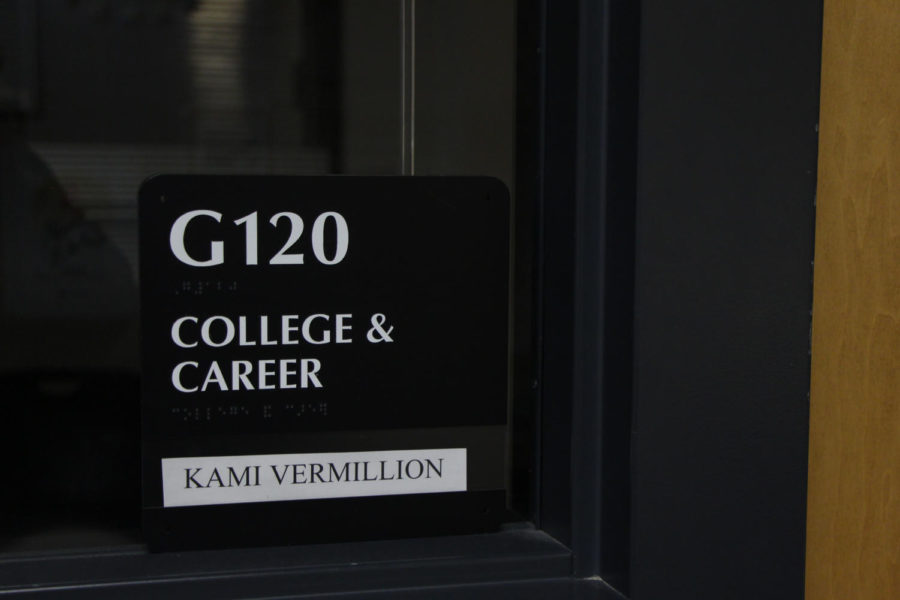
Kimberly Jordan, Career and College Center Coordinator, sees students often looking down on public state schools.
“I do feel like there is a tendency for kids to sometimes say ‘I’m only going to [University of Oregon],’ or ‘I’m only going to Oregon State,’ which makes me so sad, because those schools are great schools that are nationally known,” Jordan said. “It shouldn’t be looked down upon, and another school that maybe has a more prestigious name shouldn’t be seen as better than that.”
As this toxic environment surrounding applications continues, more students are applying to several competitive schools, in hopes of getting an acceptance letter from at least one of them. These rising numbers of applicants have made competitive colleges even more challenging to get into.
In 2020, New York University’s (NYU) acceptance rate was 15%. Today, NYU’s acceptance rate is 7.7%, meaning it’ll be twice as hard for this year’s seniors to get accepted than the seniors from the class of 2020.
With these changing rates, more high schoolers are starting to focus on college admissions, starting as early as middle school—planning how many Advanced Placement (AP) classes to take, what extracurriculars to participate in, and even brainstorming college essay ideas years before they have to actually write them.
With this rising trend, students have even gone to the extent of starting nonprofit organizations just for the sake of college applications, which ultimately eliminates the real meaning of organizing a nonprofit as a high schooler. This pattern continues among other activities, like school clubs, internships, and leadership positions that are usually started from passion, not to fluff up your application.
Many have started hiring private college counselors to review their applications and get suggestions on what would appeal to admission officers.
This isn’t too excessive if you’re really aiming high to go to an Ivy League school.
One in five surveyed incoming freshmen in Harvard’s Class of 2026 reported working with a private admissions consultant, Forbes states.
From these statistics, private college counseling has been more popular than ever. But these private counselors are not at all necessary.
It’s important to seek out help to plan your college application, but these counselors can start to drown out your own intuition on what extracurriculars to put on the activity list, what topic to write for your essay, or even what teachers to ask for recommendation letters.
“I hope that we would be in a situation where [seniors] don’t feel like they need to [hire a private college counselor], because we can support you here in school enough to make that unnecessary,” Jordan said. “There are little niche areas that some college counselors focus on that might be useful to people, but I would hope that we could provide the services they need without feeling like they had to pay for it.”
One of the most vital keys to a good college application is to express the true self you want people to see, not what you think admissions officers would like best. As many start to hire their private college counselor to micromanage their application process, these counselors become more expensive and not accessible to many students.
TikTok college influencers like Ivy Road Map and Limmy Talks utilize this to create free college counseling content—giving tips on how to write an outstanding essay or releasing statistics on admissions patterns at top schools. But, this is not the content high school seniors applying to colleges should be looking for.
“If you don’t do this, you will get rejected from all your dream schools” and “If you aren’t doing this right now, it will make or break your college application” are ways these TikTokers start their videos, making the stakes seem high.
In reality, the admissions process is not as intense as they make it sound. Some of these TikTokers even have students submit their applications for them to judge whether or not they will get into their dream school. Even though they offer free college advice, they pressure high schoolers into thinking their application is always lacking.
Although some of their advice is genuine, much of their pressuring introductions to their videos are part of their business scheme. If you look at their social media profile, it’s linked to their own college counseling business.
Seniors should utilize the accessible resources around them, like visiting a college career counselor at their school if they have one, or finding free, reliable online resources to help guide them, because at the end of the day, it’s you who’s submitting that application, no one else can submit a more genuine and authentic application than yourself.
But, even as May approaches and students get their acceptance letters, the toxicity doesn’t stop. Students’ perspectives on how intelligent or talented their peers are affected by the school name they have written on their sweatshirt. The process of picking which college to attend can be just as hard, if not harder, as applying to them. The rankings cannot mask the rising tuition and fees that come along with committing to a school.
Top schools, like the University of Southern California (USC), can charge tuition of over $70,000 for tuition a year. But students are quick to judge. Even if one were to get into a school like USC, they may not have enough financial aid to attend; it doesn’t make them any less smart or talented if they chose to go to a state school instead. Whatever plans one has after high school does not define who they are; it doesn’t prove how intelligent someone is. It’s an opportunity to help graduating seniors succeed and build up their future.
As I proceed through this year’s admissions process, I not only encourage myself but also other seniors to focus on themselves. No matter where you end up after high school—whether that’s a prestigious university, community college, taking a gap year, or going straight to work—getting your high school diploma is an accomplishment in itself, and with hard work and determination, you will end up exactly where you’re meant to be.
