
















![MORE THAN A GAME. With two diving catches in the outfield, the Lions showed up defensively, aiding in their victory over the Pacers. One catch was made by Atwood, and the other by McGraw. Throughout the game, the Lions knew that it wasn’t just about their victory today. “I think [playing for cancer] makes it bigger than just a game,” McGraw said. “Knowing that you have a bigger impact in this world than just who you are as one person.”](https://wlhsnow.com/wp-content/uploads/2026/05/I70A1454-1-1200x800.jpg)



















![Students in the National Art Honor Society work on the Mount Hood mural on the window of SouthLake Church. The students brought a variety of paints and mixed their own custom colors. “Instead of brushstrokes, we’re doing more dabbing, because it gives [a] better impression of tree foliage, rather than looking like actual brush strokes, because if we’re painting trees, we need it to look like trees,” Crawford said.](https://wlhsnow.com/wp-content/uploads/2025/10/IMG_2397-1200x900.jpg)



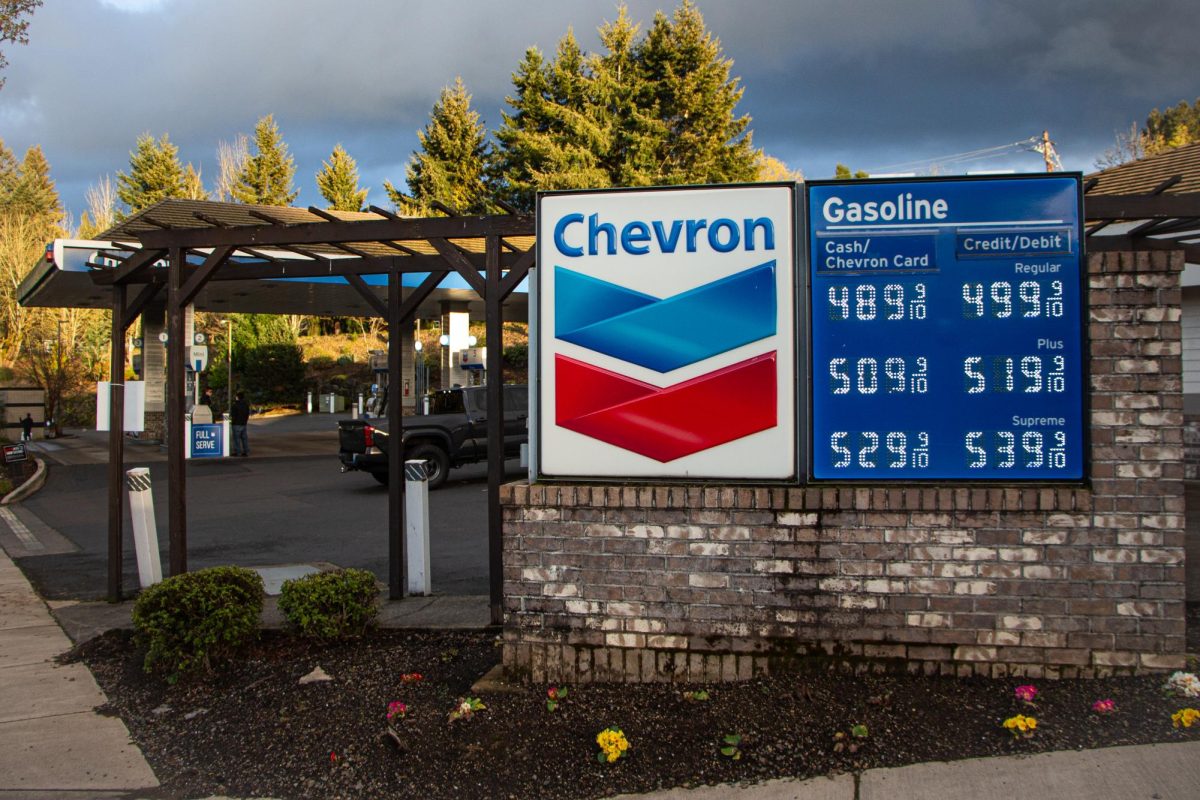
According to the American Automobile Association, gas in Oregon has risen 50 cents per gallon and, according to the New York Times, the national average has gone up a dollar within the span of a few weeks after the start of the Iran war. This places Oregon in the top five most expensive states to get gas, with an average of $4.305 a gallon, according to the American Automobile Association.
As a result, drivers are having to spend more on average than in previous years. Micah Hall, sophomore, works at Chevron and has noticed the effects of the rising prices up close.
“[While] selling [gas], you definitely see more people just getting $20 or putting $30 on instead of [filling it all the way],” Hall said. “I’ve noticed [that] whereas gas used to be not that much, [and] I’ll just put on 20 bucks every week, and now doing that, I’m still gonna run out of gas. I have [gotten to] where I’m actually spending most of my money on gas.”
One of the biggest effects on the prices in recent weeks has been the conflicts between the United States, Israel, and Iran, which began in late February. Tonya Dailey, economics and history teacher, has seen the increase in prices and tension.
“I don’t think the demand has changed, but the supply certainly has, in part because of the war, with the military actions that are happening in the Middle East right now, it’s decreasing access to be able to get those tankers through places like the Strait of Hormuz,” Dailey said. “But I think at a deeper level is that uncertainty [which] causes people to behave in inconsistent ways, and it makes people feel worried, and if they’re worried, then they’re going to try to get more gas because they don’t know if the price is going to go up.”
According to Worldometers, Iran shares roughly 11% of the world’s oil reserves, behind Saudi Arabia and Venezuela. Part of what has been causing this increase has been Iran’s closing of the Strait of Hormuz.
“We’re a few weeks later, and before the whole Iran war started, it was [a] full $2 less,” Hall said. “I’m kind of to the point where it’s like, ‘should I get gas now, because it’s probably gonna go up more, or should I wait to get gas until maybe it’ll go back down in a week or two?’ But I really don’t know if it’s gonna keep getting worse, [or] if it’s gonna stay, [or] go back down to how it was before.”
Another part of what’s causing the rise in prices is the uncertainty of the people. Uncertainty is what causes a lot of stock price decreases, where economists will start to change their behavior because of a lack of knowledge about what’s to happen next.
“When people get worried or uncertain about the future, they change their behaviors,” Dailey said. “Some people may be thinking about planning trips and those kinds of things, but if they’re worried about the price of gas going up this summer, they may change their behaviors. And if they change their behaviors, that’s going to have an impact on the campgrounds that they may have stayed at, they’re not going to be accessing hotels, restaurants, and so forth. Similarly, if I were going to think about a big purchase, I might hold off right now because I don’t know what’s going to happen to the stock market. It’s doing a lot of up and down right, in part because investors are not sure. That uncertainty causes a lot of people to change their plans, and usually, when they change their plans, they change their plans from spending money to not spending money. And when people stop spending money, then folks who might want to have a job like pumping gas may not need as many people to pump gas, right? And so you’re going to see that ripple effect on unemployment in other sectors too.”
Because of the higher prices, Hall has started rethinking going on trips, even if it’s close to home.
“It’s not about the money that I would spend on the trip, but it’s about the gas money,” Hall said. “Last weekend, I got gas, and I was like, ‘okay, this should be it before I go on my trip.’ But then I noticed I’ve done just two kinds of long trips out of West Linn, and I already have to get gas. I’m a lot more cautious [now] about [wanting] to go to my friend’s house, but I don’t want to use two gallons of gas. That’s 10 bucks. If I’m going to lunch and I use two gallons of gas, I’m paying $15 for food. That’s 25 bucks just to go.”
As the war continues, it’s uncertain whether the prices will stay steady, decrease, or increase. Currently, around the world, countries are entering multiple states of emergencies due to the lack of gas, with some gas stations even running out of gas, and other countries limiting how much each person can get. Despite the US being mostly built around cars, there are multiple other ways to get around without driving yourself. For example, public transportation, riding bicycles, or just walking.
“You want to minimize cost and maximize benefits,” Dailey said. “If prices of gas are really high, then people will carpool more often, they are going to drive less, [or] they’ll ride their bike. [They’ll take] public transportation more often. Sometimes we can adjust, and sometimes we can’t when there’s a price change. And for most of us, we can’t do much of that with gas, because we have a gas-powered vehicle. We have to get to school or to work. We can’t just say all of a sudden we’re not going to use gas.”
Through all the trouble, Hall has found some positives to look at.
“It definitely has made me think more about where I’m going, how I’m driving, how much I’m going to be spending when I’m there,” Hall said. “[It] helps you prepare for that real-world aspect [of managing your own finances and spending].”

