




















![MORE THAN A GAME. With two diving catches in the outfield, the Lions showed up defensively, aiding in their victory over the Pacers. One catch was made by Atwood, and the other by McGraw. Throughout the game, the Lions knew that it wasn’t just about their victory today. “I think [playing for cancer] makes it bigger than just a game,” McGraw said. “Knowing that you have a bigger impact in this world than just who you are as one person.”](https://wlhsnow.com/wp-content/uploads/2026/05/I70A1454-1-1200x800.jpg)






















![Students in the National Art Honor Society work on the Mount Hood mural on the window of SouthLake Church. The students brought a variety of paints and mixed their own custom colors. “Instead of brushstrokes, we’re doing more dabbing, because it gives [a] better impression of tree foliage, rather than looking like actual brush strokes, because if we’re painting trees, we need it to look like trees,” Crawford said.](https://wlhsnow.com/wp-content/uploads/2025/10/IMG_2397-1200x900.jpg)




As college admissions have become increasingly competitive, the College Board, the non-profit behind the SAT (Scholastic Aptitude Test), has offered students advanced placement (AP) courses as a solution. Although the College Board’s SAT revenue has been cut in half from 400 million in 2019 to 200 million in 2022, the College Board has pitched the AP exam as the new best way for students to save on college and look more competitive for admissions, particularly to an increasing number of lower-income students enrolled, making the College Board 500 million in AP revenue last year.
However, since 2020, College Board fees have risen by an average of 1% each year. Although this may not seem significant when the cost of one exam is now $99, it can have a real impact on families’ budgets and their ability to afford enrolling their children in these courses. Furthermore, many people have questions about the College Board’s altruism, as their CEO, David Coleman, makes over 2 million while they have gained over 2 billion in assets, with this number growing each year. Although they have come under scrutiny for their cost, the College Board provides college-credit courses at comparatively low cost.
Matt Gottschling, AP United States History teacher and AP teacher for 16 years, works with the College Board.
“I think that if schools don’t have that money, subsidies to help pay or offset the cost of AP exams for their students, then fewer students are going to have those opportunities,” Gottschling said. “And that becomes a really unfortunate thing, because we’re essentially saying that [only] kids who can afford to take these classes, in a public school, can take the class.”
The education gap is growing, and increasingly powerful educational institutions like the College Board have not done a lot to stop it.
“Essentially, we’re kind of creating opportunities in a tiered system where some kids can access that and others can’t. And it has nothing to do with their ability or their enthusiasm for the content; it’s instead determined by socioeconomics,” Gottschling said.
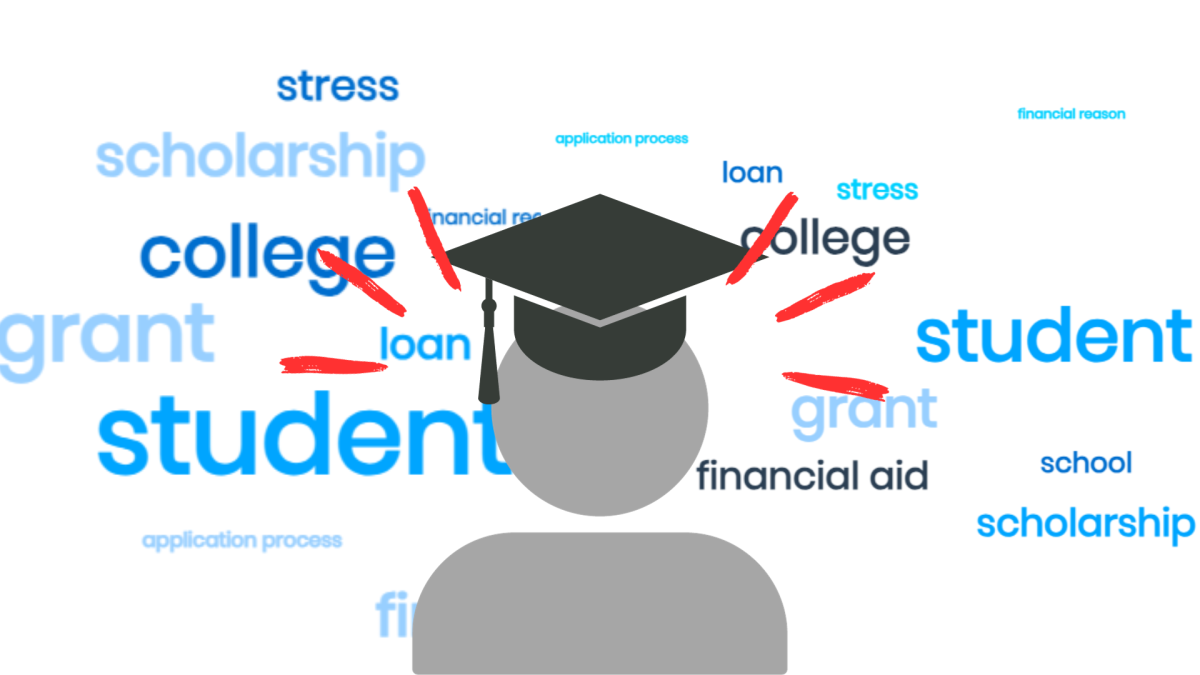
But as taking AP courses are harder for lower-income students, the value of apps for getting into college and getting needed scholarships are growing.
“Especially as there’s this kind of pressure that some students feel, whether it’s real or not, to take more and more AP classes, that’ll continue to create more of a financial burden,” Gottschling said. Students are now taking more and more APS for a variety of reasons, but increasingly considering that advice for students trying to get into top colleges now is to found a nonprofit, many students are feeling the pressure to take more courses to strengthen their college applications, and recently uniquely across all backgrounds.
The College Board’s status as a nonprofit has been deeply contentious.
“The College Board is not very transparent about the fact that they’re a for-profit business. I mean, they try to make it look sort of like they’re a non-profit educational service, but at the end of the day, they make a whole lot of money,” Gottschling said.
Although many students may struggle to afford the cost of AP, there are financial resources available to students to help with the cost.
“I think a lot of times, students don’t know that, one, those things are available, and two, how to ask for them and advocate for that,” Gottschling said. “And I think there’s also sometimes a stigma that kids have, they worry if they’re doing that, other people are going to know, there’s going to be certain, you know, judgments about that, and that’s unfortunate, too.”
Within the West Linn Wilsonville School District, if students want to find ways this school can help assist them or pay for their AP exam, adult resources are a starting point.
“My understanding is that they would talk to the testing coordinator. Also, counselors are a good resource for that,” Gottschling said.
Ultimately, although College Board costs are a concerning issue, there are many ways students, especially in our district, can contend with those costs, and it remains a valuable opportunity.
