












![MORE THAN A GAME. With two diving catches in the outfield, the Lions showed up defensively, aiding in their victory over the Pacers. One catch was made by Atwood, and the other by McGraw. Throughout the game, the Lions knew that it wasn’t just about their victory today. “I think [playing for cancer] makes it bigger than just a game,” McGraw said. “Knowing that you have a bigger impact in this world than just who you are as one person.”](https://wlhsnow.com/wp-content/uploads/2026/05/I70A1454-1-1200x800.jpg)


















![Students in the National Art Honor Society work on the Mount Hood mural on the window of SouthLake Church. The students brought a variety of paints and mixed their own custom colors. “Instead of brushstrokes, we’re doing more dabbing, because it gives [a] better impression of tree foliage, rather than looking like actual brush strokes, because if we’re painting trees, we need it to look like trees,” Crawford said.](https://wlhsnow.com/wp-content/uploads/2025/10/IMG_2397-1200x900.jpg)



Ticket disasters
How Ticketmaster came to be, and its effect on the entertainment industry
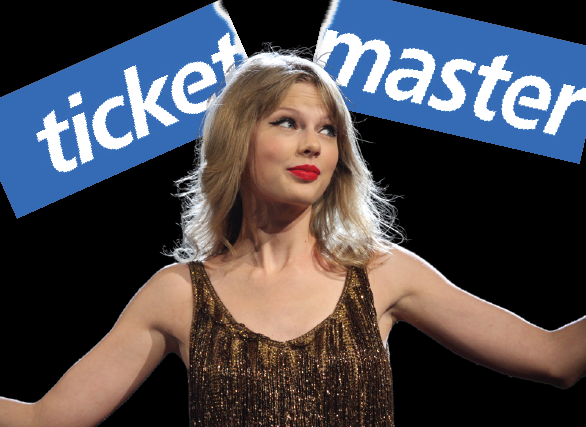
Ticketmaster’s monopoly on concerts tickets has provided controversy since 2018.
Music is consumed in various ways, and one of the most popular ways to experience music by going to a concert. Ticketmaster sells over 10 million tickets a week, meaning anybody who has ever been to a concert has probably considered the option to purchase their tickets through Ticketmaster.
Founded in 1976, Ticketmaster sold its first concert the year after. Over the decades of Ticketmaster’s existence, it has created contracts with several music venues and has merged with a number of companies.
In 2009, Ticketmaster planned to merge with the event promoter Live Nation, and was cleared by the U.S. Justice Department the following year. This is what led to the Ticketmaster we know today. Because of their monopoly, there are few alternative ways to purchase tickets to the biggest events, besides purchasing them through resellers.
Ticket scalping is the act of reselling tickets, often at a much higher price than originally purchased. And on various occasions, Ticketmaster has helped scalpers by selling tickets on resale sites before giving the fans a chance to purchase them. When these allegations were made in 2018, Ticketmaster issued a response. And Senators Jerry Moran and Richard Blumenthal sent a letter to Jared Smith regarding the difficulty of finding the tickets at face value.
“Ticketmaster does not have, and has never had, any product or program that allows ticket scalpers, or anyone else, to buy tickets ahead of fans.” Smith said in his response. However, they’ve also made more revealing statements after ticket scalping schemes were discovered between Ticketmaster and Metallica. “[We have] facilitated the quiet transfer of concert tickets directly into the hands of resellers through the years, though only at the request of the artists involved,” Ticketmaster stated.
A number of Ticketmaster’s controversial business practices came to light with the congressional hearing earlier this year regarding the presale for Taylor Swift’s newest tour, which overwhelmed the system and left many fans unable to purchase tickets.
There was an overwhelming amount of agreement amongst senators regarding Ticketmaster’s alleged monopoly on the ticket sales. Senators Amy Klobuchar and Mike Lee wrote a bi-partisan statement regarding Live Nation’s lack of competition.
“Every witness at our hearing testified that Live Nation is harming America’s music industry,” Klobuchar and Lee said.
Live Nation attempted to downplay the amount of control they have over the entertainment industry and deflected much of the blame for the Taylor Swift debacle, placing blame on ticket scalpers. Joe Berchtold, is the president and Chief Financial Officer (CFO) of Ticketmaster.
“[We need to] recognize how industrial scalpers [break] the law using bots and cyberattacks to try to unfairly gain tickets contribute to an awful consumer experience.” Berchtold said to the senate judiciary committee.
Berchtold also asked for “federal legislation to mandate ‘all-in pricing,’” meaning that fans should know the full cost of their tickets from the start,” despite Ticketmaster getting fined almost $3.5 million for raising advertised prices by 20—65%.
Various fees are still found when purchasing tickets through Ticketmaster. This includes the delivery fee and the service fee. Both fees are not included in the initial price listing.
Ticketmaster is a prime example of the effect that capitalism has on the music industry. Large artists like Swift and SZA have their tickets raised to thousands of dollars by resellers taking money from desperate fans, and it is made harder for smaller artists to make a living because of the large percent of the ticket price that goes to Ticketmaster.
With the upcoming shows this summer, look for alternative options for buying tickets, such as buying them straight from the venue, or the several other online ticket selling sites.
Your donation will support the student journalists of West Linn High School. Your contribution will allow us to continue to produce quality content by purchasing equipment, software, and continuing to host our website on School Newspapers Online (SNO). Additionally, donations will go towards paying for the physical editions of our Amplifier. Donations of $20 dollars (as of Oct. 15, 2025) or more will receive a subscription to our Amplifier, which will be mailed to the donator's address (donations made with the intention of purchasing a subscription CANNOT be anonymous).

Preston Weller, junior, is in his second year of journalism. He enjoys his free time by walking, listening to, and playing music. This year he looks forward...